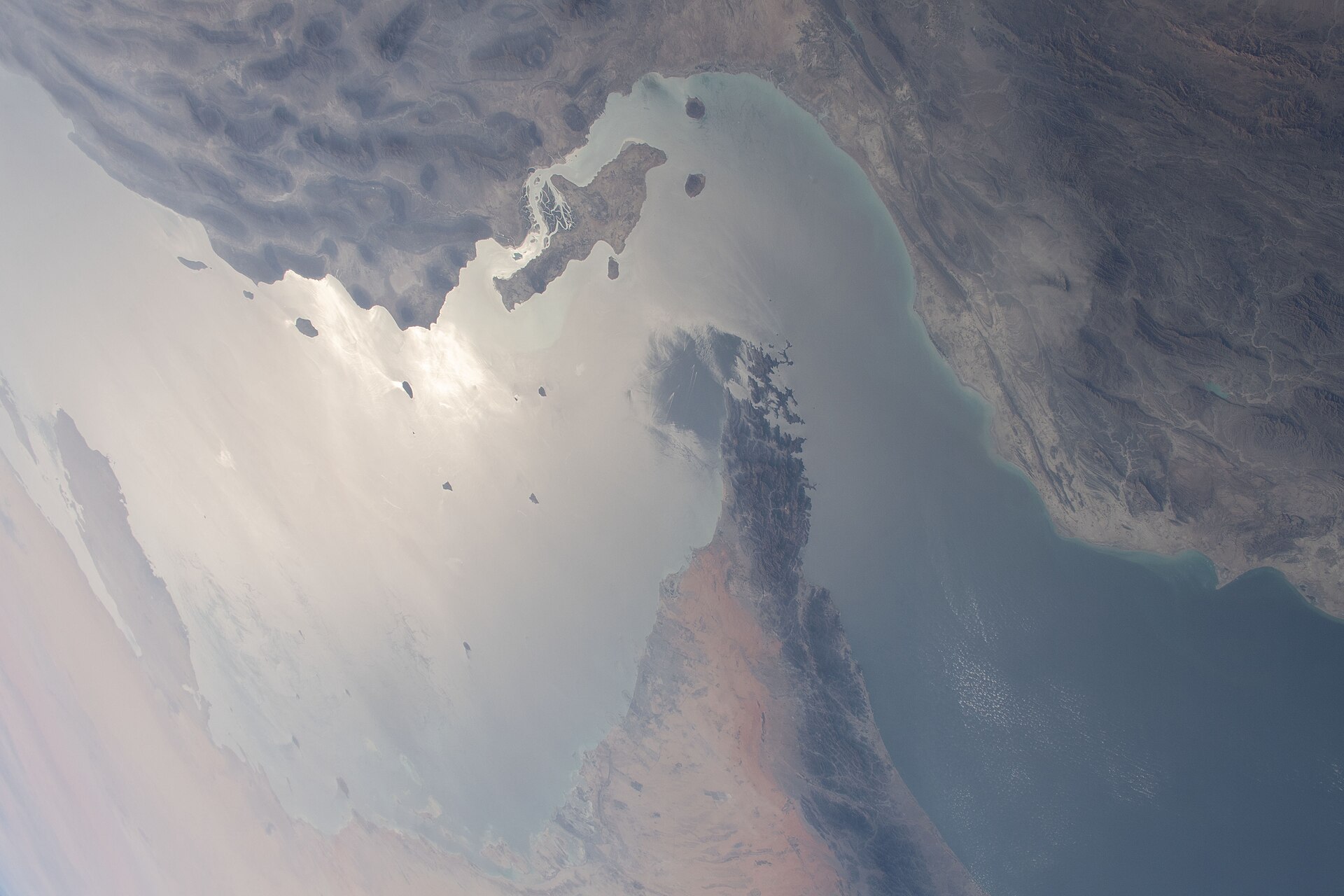
The Strait of Hormuz is a tanker problem before it is a diplomatic one. It is the only sea exit from the Persian Gulf. The National, citing Kpler, wrote on 17 August 2026 that a fifth of the world’s oil and gas normally passes through it.1 Gulf Business, reprinting Reuters the same day, used the same fraction for pre-war crude and LNG shipments and put pre-war traffic at more than 130 ships a day.2 Anadolu Agency, citing Windward and S&P Global in March, put the historical average at 138 vessels a day and about 20 million barrels of oil and petroleum products.3 Geography, EIA peacetime flow, and the partial pipeline bypasses sit on the evergreen Strait of Hormuz oil chokepoint note. This page stays the dated 2026 traffic file.
That baseline is what mid-August 2026 collapsed against.
Single-digit crossings after the 60-day clock ran out
The interim US–Iran agreement — the Islamabad Memorandum of Understanding — was signed on 17 June 2026, The National reported. Its 60-day window expired on Sunday 16 August with neither side willing to extend it.1 Al Jazeera, writing on 18 August, dated the expiry to Monday.4 The two newsrooms disagree by a day; both place the end of the memorandum in mid-August.
Kpler’s daily counts, as published that week, are the traffic record:
- The National (17 August): three vessels transited on Sunday, five on Saturday, and 12 on Friday. Weekly crossings had peaked at 275 in the week of 24 June, then fallen 64 percent to 98 by the first week of August, and from there into single-digit daily crossings.1
- Reuters, via Gulf Business (17 August): five commodity vessels on Saturday and none registered on Sunday, versus 31 over the prior weekend.2
The Sunday figure is not identical across those two write-ups of Kpler (three versus none). What both show is a near-standstill — single digits, and a weekend far below the 31 crossings of the week before.
Some ships may pass with transponders off, Reuters noted, but the tracked figures are far from the more than 130 ships a day that used the strait before the war began in February.2
Attacks on tankers
The slowdown was not only a negotiating deadline. Reuters reported that shipping ground toward a standstill after the United Arab Emirates said three vessels operated by the Abu Dhabi National Oil Company were attacked in transit the previous week.2
Windward, in an 17 August maritime note, described two ADNOC-affiliated tankers struck by UAVs while transiting Hormuz on 14 August — a Singapore-flagged products tanker and a Liberia-flagged Aframax, both AIS-dark since July — and a separate ADNOC tanker attack the UAE reported on 8 August. Windward recorded that neither UKMTO nor US Central Command had confirmed the 14 August incident at the time of writing.5
On 18 August, UKMTO told Al Jazeera a vessel had been hit by an “unknown projectile” in the strait, damaging the engine room and causing a crew casualty. The Omani coastguard was assisting the remaining crew; no environmental impact had been reported.4
The Gulf backlog
Ships that will not enter the strait still have to wait somewhere. The National reported Kpler’s estimate that around 520 commercial vessels were stuck in the Arabian Gulf. Ana Subasic, a trade-risk analyst at Kpler, said that if and when unrestricted traffic resumes, clearing the backlog and increasing flows would take at least six to eight weeks, depending on demining and whether operators are willing to sail.1
Who is still moving oil — and who is not
Iranian oil through Hormuz took the steepest cut. Kpler figures in The National show Iranian exports through the strait rising briefly to 1.545 million barrels a day in the week of 29 June, then falling as much as 94 percent to 91,900 bpd in the week of 3 August.1
Other Gulf producers that depend on Hormuz — Saudi Arabia, Iraq, the UAE, Kuwait, Oman, Qatar and Bahrain — held up better on the same dataset. Their combined crude exports through the strait were 2.948 million bpd in the week beginning 3 August, down about 6 percent from 3.14 million bpd in the week of 15 June, the last weekly print before the memorandum. Those flows had climbed to about 6.7 million bpd in late June before easing. The National attributed much of the residual movement to smaller shuttle tankers running to transfer points outside the strait.1
How ships move when they do move has also changed. Kpler told The National that more than half of all crossings tracked since the war began on 28 February were “dark,” with no reliable tracking signal, and a further 29 percent used Iranian-controlled routes. All three vessels that transited on the Sunday in that report were inbound; one was an India-flagged VLCC from Sikka using the Iranian route, and the other two went dark.1
Reuters’ Saturday snapshot matches that pattern: an empty VLCC entering with AIS off, an Indian-flagged VLGC on the Iranian route, and a small tanker leaving with Iranian fuel oil.2
The political and military sequence of the 2026 closure, the Islamabad memorandum, and the reopening terms is recorded on Armed Conflicts’ Strait of Hormuz crisis page.
The diplomatic reading of those same dark and Iranian-controlled lanes is that Hormuz has become a selective-access regime, not a total halt — Foreign Diplomacy’s Hormuz “toll booth” analysis is the piece that names that pattern.
What the live map can and cannot show
OilRoutes plots tankers from live AIS. It will show hulls that are broadcasting in or near the strait, and it will miss the dark ones. That is the same limitation Kpler and Reuters flagged: a transponder-off crossing is still a crossing, just not one a public map can count with confidence. Treat the Hormuz number on the stats strip as a snapshot of visible ships, not as a daily transit ledger. How to read live AIS walks the fields and the undercount; a named VLCC in a news sentence is still not a DWT filter on the map — see tanker types. The dark-AIS undercount note is the trust-calibration hub for that limit: visible AIS only, and how to read a “counts don’t match” headline next to the live box. Why that integer is not EIA flow — and which pipes partially bypass the lock — is the evergreen Strait of Hormuz oil chokepoint primer.
When Gulf barrels cannot leave by the short route, some of the fleet shows up weeks later on the long one — around the Cape of Good Hope. When those barrels go via Yanbu, they still have to clear Bab el-Mandeb or take the north-then-Cape workaround. How those extra days can move freight and a crude risk premium, without inventing a dollar print, is the markets and freight note.