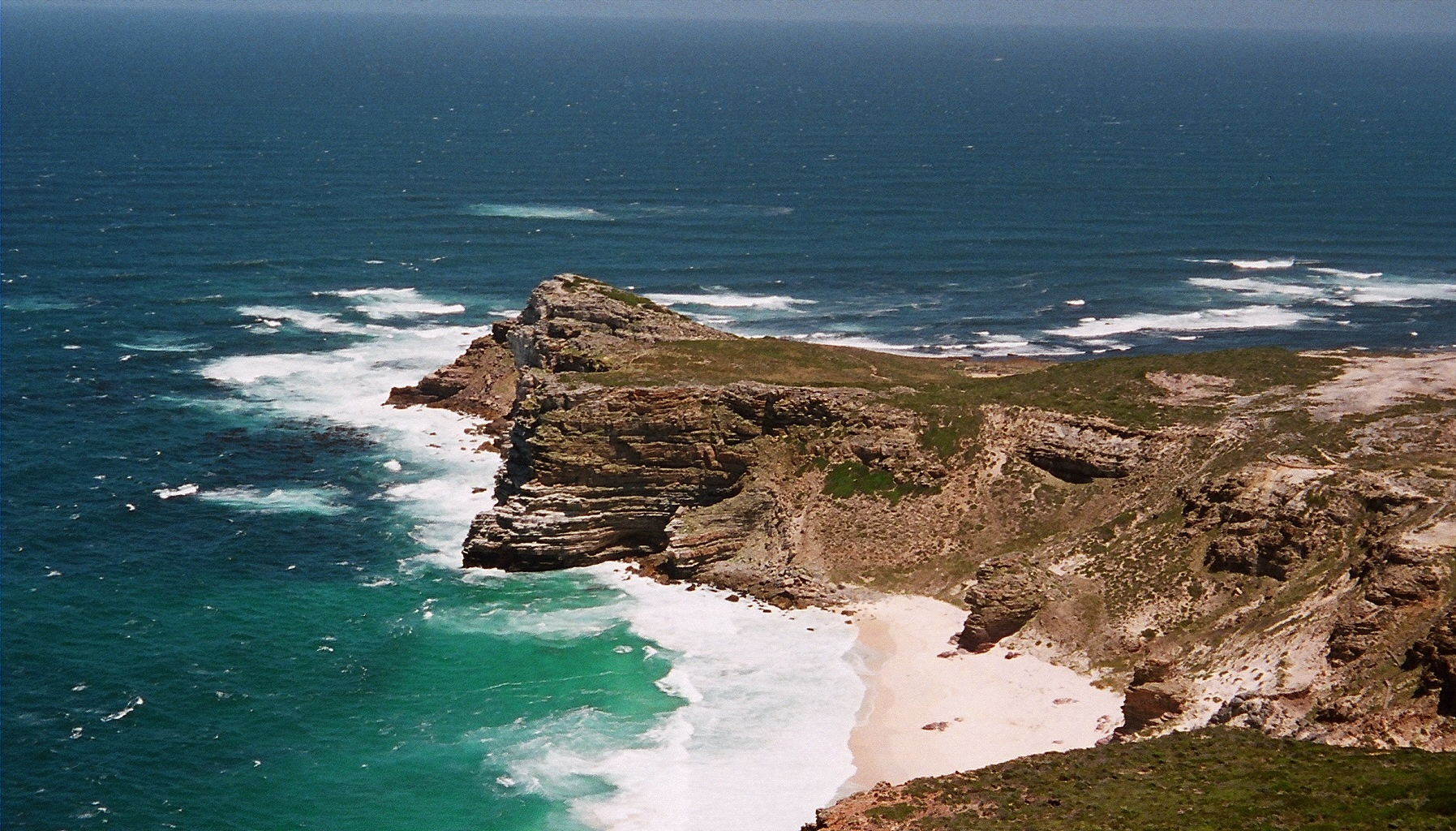
OilRoutes treats the Cape of Good Hope as a chokepoint because it becomes one when the others fail. It is not a narrow strait. It is extra days, extra bunkers, and fewer available VLCCs. The 2026 record of that detour is already long enough to write down. Those extra days are the first link in the freight and risk-premium chain — see how routes and chokepoints move crude markets. The evergreen Bab el-Mandeb file — Gate of Tears, Yanbu, and this substitute chain — is the Bab el-Mandeb oil chokepoint note.
March: the first swing around Africa
After Iran closed the Gulf exit in late February, Anadolu Agency reported on 5 March that Hormuz commercial traffic had fallen 90 percent. Windward counted only four ships on 3 March against a seven-day average, and a historical run-rate of 138 vessels a day. Cape of Good Hope transits that same day were 94 vessels, up 35 percent versus the route’s seven-day average.1
Line operators said they were leaving the region. Hapag-Lloyd told Anadolu it had not used the Red Sea since December 2023 and was extending that decision. CMA CGM ordered Gulf-bound ships to seek shelter and suspended Suez passage. Maersk suspended Suez/Bab-el-Mandeb voyages and rerouted Middle East–India to the Mediterranean and Middle East–India to the US East Coast around the Cape — a detour Anadolu put at 10 to 20 extra days.1
That was the first substitution: if you cannot leave the Gulf, you also cannot use the usual Asia–Europe shortcut, so you burn the African coastline.
July–August: Hormuz still tight, Bab-el-Mandeb closed to Saudi crude
The June Islamabad memorandum produced a brief rebound in Hormuz traffic, then the counts fell back. By mid-August, tracked Hormuz crossings were in single digits. Reuters, via Gulf Business, recorded no tracked Saudi oil shipments through Bab-el-Mandeb on the 15–16 August weekend after the Houthis declared a naval blockade on Saudi Arabia on 20 July.2
Kpler’s own August note is sharper on the Saudi crude lane. Weekly Saudi crude transits via Bab-el-Mandeb averaged above 3.5 million barrels a day in early July — lifted by higher Yanbu exports after the war began — and had fallen close to zero in August. Russian and Sudanese crude through the same strait stayed comparatively stable, which Kpler read as a Saudi-specific disruption.3
With Hormuz constrained and the southern Red Sea shut to Saudi-linked cargo, two workarounds remain.
North through Suez and SUMED — then, often, the Cape anyway
Saudi Arabia’s first substitute for Hormuz was the East–West pipeline to Yanbu on the Red Sea. OilPrice, citing Windward, wrote on 2 August that Yanbu loadings jumped to about 2.47 million bpd in early March, a 330 percent surge versus pre-war levels, and that by April the port was shipping over 4 million barrels a day. By June, Wood Mackenzie had Yanbu at around 2.39 million bpd.4
Once the Houthis targeted Saudi vessels, Yanbu cargo headed north instead of south. Reuters, in a 22 July Straits Times reprint, reported two Saudi-to-Asia tankers reversing in the Red Sea on 21 July. Shipping west from Yanbu through Suez and then around the Cape would add as much as four weeks versus the usual eastbound run from Yanbu into the Arabian Sea, analysts told Reuters. Kpler’s Matt Smith said the tanker behavior showed the threats were being taken seriously; he put Saudi crude and products transiting Bab-el-Mandeb at a June record of over four million barrels a day just before the turn.5
Kpler’s August follow-up quantified the northbound shift:
- Saudi crude transits via Suez rose from zero in May–June to nearly 500,000 bpd by late July.
- Departures to Ain Sukhna, Egypt, reached 1.32 million bpd in July, almost double June’s 770,000 bpd, the second-highest on Kpler’s record.
- Sidi Kerir departures, at the Mediterranean end of SUMED, jumped to a record 2.4 million bpd in the first week of August, from a July average of 1.3 million. About 700,000 bpd of that week’s volume was headed to Asia (Thailand, India, the Philippines) rather than the terminal’s usual European buyers.3
OilPrice, citing Windward and Kpler, put SUMED capacity at 2.5 million barrels a day and the Suez Canal’s oil-handling capacity at about 1 million barrels a day, with some SUMED capacity already reserved by other shippers.4
Kpler’s worked example is the VLCC Front Empire: it left Muajjiz on 25 July part-laden with 1.2 million barrels, transited Suez (VLCCs cannot cross fully laden), took on a further 800 kbd at Sidi Kerir on 6 August, and was expected to sail on to South-Central Asia — likely India — via the Cape of Good Hope. That implies a discharge in early September: roughly 40 days, versus the usual 8 days from Yanbu to India’s west coast.3
Hulls on the Cape route
Windward’s 17 August note counted twelve Saudi-flagged tankers and bulk carriers rerouting via the Cape of Good Hope that week, up from eight in prior reporting, avoiding Bab-el-Mandeb and Suez entirely. The firm put the extra distance at about 4,000 to 6,000 nautical miles and 10 to 14 days per voyage. Several ships changed declared destination more than once mid-transit.6
Those twelve hulls are not “global trade.” They are a visible Saudi-flagged sample on one weekend’s imagery. They are enough to show the Cape is in active use as a wartime substitute, not a theoretical line on an atlas.
The cost shows up in inventory as well as in days. Kpler said the longer voyages, tighter Hormuz transits since mid-July, and the late-July Jizan refinery shutdown had pushed Saudi crude inventories to multi-year highs: 63 percent utilization by early August, or 75 million barrels, versus 61 million barrels (52 percent) in June.3
The Houthi naval blockade that shut Bab-el-Mandeb to Saudi-linked cargo, and the Red Sea campaign behind those Cape detours, is recorded on Armed Conflicts’ Red Sea crisis page.
The same insurance and sanctions shocks that push hulls around Africa are why Foreign Diplomacy treats Hormuz risk as a rewrite of the oil-sanctions playbook, not just a Gulf shipping delay.
What to watch on the map
On the OilRoutes map, Cape traffic is the slow consolation prize for a blocked Gulf. A tanker rounding South Africa in August 2026 is often not “choosing a scenic route.” It is completing a voyage that used to be a Hormuz exit plus a Bab-el-Mandeb or Malacca run.
AIS will under-count this too. Windward and OilPrice both describe Saudi loadings and Red Sea legs running dark. A Cape-bound VLCC that went silent off Yanbu may only reappear near Durban or in the South Atlantic. The chokepoint monitor’s Cape count is visible ships in that box, not a complete reroute census. How to read live AIS is the literacy note; VLCC / Suezmax / Aframax is the size-class note — the map still does not filter by DWT.